Thursday, June 17, 2010

Patan Dhurba, public taps & things that sometimes happen to patients on their way to proper diagnosis

Elisa and I took some Aussie and an American guest a few blocks from Patan Hospital to visit Patan Dhurba Square.


Very common sight: people line up to get water from the public taps (because they do not have water in their homes).  


A new leprosy patient reported to our doctors recently. His right hand was swollen from a leprosy reaction. No one had correctly diagnosed him previously. A well-meaning relative had placed a traditional hot poultice on him – which explains the burns. Another patient came in with 3 severe burns on his elbow. Wanting to test nerve damage by sensation of hot and cold, a doctor from somewhere else had taken a glass test tube of boiling water and held it to the patient’s skin in 3 sites around an elbow lesion. “Do you feel this?” The patient felt nothing because the nerves were damaged from leprosy. However, one is supposed to use warm water – not boiling water!

Wednesday, June 16, 2010

View from within the burned out forest above Anandaban (hilltop)

To see information about the forest fire, see postings from April 2010.

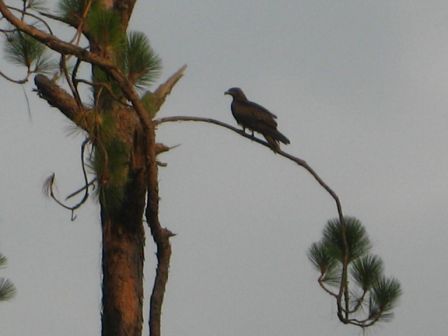
Mountain hawk-eagles and more nature observations

There is a pair of these that stay in the trees about my house for many hours every day. From these steep hillside treetops, they have a nice view overlooking a rural valley of hand-farmed fields. Whatever they are, they’re a very talkative species with piercing cries as they circle and land, circle-dodge ravens– and land, soar – circle and land, etc, etc.


Someone saw one of them in the tree with a serpent in its mouth. In the high hills, we do not see many snakes and most are not poisonous. (Snakes/poisonous ones are more common in the hot Southern flatlands, but here we see maybe 2 slow moving rat snakes a year.) Nevertheless, the mongoose and hawk-eagle yard patrol is much appreciated as well as entertaining.


The monsoon rains have not officially begun – but the insect eggs from last year are awakening with the pre-monsoon occasional showers. The cicadas, locally called the “boring bug”, have started their monotonous monotones. They won’t begin to die out until the end of July or August. Sometimes they are so loud in the evening, that even with the windows closed, it is difficult to hear someone trying to speak on the other side of the room! I typically do not see many roaches – but the other day sighted one that probably could take on a mouse. The giant slugs (~5-6” length, 1” diameter) and their arch enemy, the slug-tigers with green glow-in-the-dark spots on their rears, will appear within the next month or so. But, thankfully, the summer leeches have not yet become a common sight. J

Monday, June 14, 2010

Mongoose sightings & Nepalese Orange mosquito hawks


Nuwakot Camp Pics: last patient

The last patient of the camp: he walks boldly in, declaring vague stomach symptoms to Dr. Pradeep as Dr. Indra looks on. Dr. Pradeep began to ask the standard questions without receiving the normal answers. “Well, it’s not happening now. Sometimes.” A smile and a another question. “Well, really it’s for my Grandma.” Dr. Pradeep writes a prescription for a one dose chewable dewormer (something essentially everyone, kids to Grandmas, needs here anyway).  J   

Nuwakot camp: Dental room

I did not spend too much time in the dental room this camp. They extracted around 30 teeth with anesthetic. Extraction is essentially what Yam and Karuna can do during these camps – and it is amazing to see some people so happy to have a troublesome tooth removed. Honestly, though, when I went in the room, Yam was removing a tooth. And the cracking sounds weren’t pleasant. The next patient looked on indecisive. The receiving lady calmly declared she felt nothing while Yam yanked, cracked and pulled. So…I did not stay in that room that long this time. J

Nuwakot camp: General, skin, women & children rooms

Sylvia, a Swiss nurse, and Neeru (a translator) talk to a patient. Dr. Ponkaj listens to a mother and daughter. Two Swiss nursing student volunteers weigh and take the blood pressure of women patients for the gyne room. Dr. Min checks a baby’s feet while his mother describes symptoms. Nearly everyone has recurring stomach complaints, so antiparisitics and dewormers are essentially given to everyone.